Coins
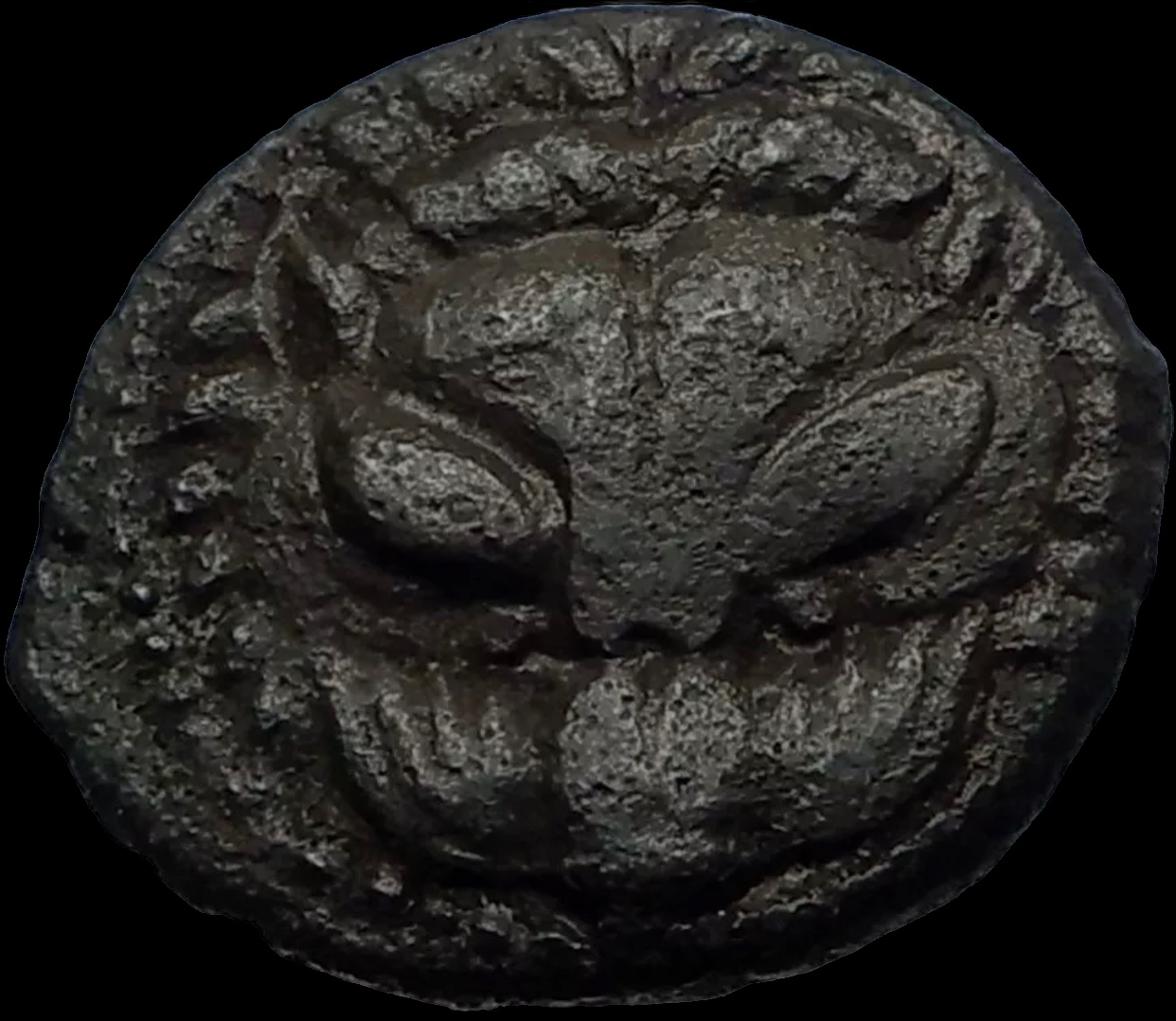
Ancient Coin, Lion Head
Greek Period
Every ancient coin was once held in a living hand — passed from merchant to customer, from soldier to tavern keeper, from tax collector to emperor's treasury. This coin, bearing the powerful image of a lion's head, was not merely a medium of exchange; it was a statement of authority, a portable work of art, and a declaration that the power that issued it was as fierce and indomitable as the king of beasts.
The lion has been a symbol of royal power since the dawn of civilisation. From the Lion Gate at Mycenae to the heraldic lions of medieval Europe, no animal has been more consistently associated with sovereignty, courage, and strength. To stamp a lion on a coin was to declare: this currency is backed by power that will not be challenged.
This small disc of metal has survived wars, invasions, and the collapse of the civilisation that created it. It has been lost and found, buried and unearthed, forgotten and rediscovered. And through it all, the lion still roars.
Provenance & Details
- •Private collection, acquired prior to 1970.
- •from the Private Collection K. N. H., Switzerland
- •P. Mirabaud & A. de Reuterskiöld, Die Postmarken der Schweiz 1843–1862, Paris, 1899
- •J.J. Winkler, Handbuch der Schweizer Vorphilatelie 1695–1850, Verband Schweizerischer Philatelisten-Vereine, 1968
- •Grosses Handbuch der Abstempelungen auf Schweizer Marken 1843–1907
- •Zumstein Schweiz/Liechtenstein Katalog, Zumstein & Cie, Bern
- •Schweizer Briefmarken Katalog (SBK), SBHV, Basel
- •Michel Schweiz-Spezial-Katalog, Schwaneberger Verlag, München
The roar of the lion, a symbol of royal power in the ancient Near East, found a new and enduring medium in the 7th century BCE. In the kingdom of Lydia, in modern-day Turkey, the world’s first true coins were minted. These small, bean-shaped lumps of electrum, a naturally occurring gold and silver alloy, were stamped with the head of a roaring lion – the heraldic emblem of the Lydian kings. This innovation replaced the cumbersome system of weighing precious metal for each transaction, revolutionizing trade and commerce across the ancient world. The Lydian lion coins were not just a practical tool but also a powerful form of propaganda, proclaiming the authority and wealth of the kingdom with every exchange.
The creation of these coins was a testament to Lydian ingenuity. Metalworkers would heat a pre-weighed blank of electrum and place it on an anvil die carved with the lion's head. A punch was then hammered onto the reverse, leaving a characteristic incuse square while forcing the metal into the obverse design. This process, though simple, created a standardized currency that was readily accepted in the bustling markets of Sardis, the Lydian capital, and beyond. The legacy of these first coins is immense; they laid the foundation for the monetary systems that would develop in ancient Greece and Rome, and ultimately shape the economic trajectory of human civilization. Today, each Lydian lion coin is a tangible link to the dawn of currency, a miniature monument to a pivotal moment in economic history.
Enquire