Antiquities
Ancient Egyptian Faience Shabti (Ushabti)
Egyptian Late Period, 664–323 BC
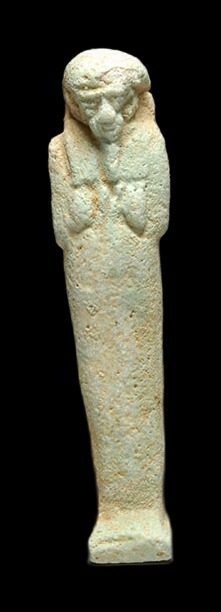
A well-modelled ancient Egyptian faience shabti (ushabti) dating to Egypt's Late Period, approximately 664–323 BC. The figure wears the tripartite wig and the beard of Osiris, and holds agricultural implements — the hoe and pick. Shabtis were funerary figures placed in tombs of wealthy individuals; their human appearance was intended to deceive the gods into believing the shabti was the deceased, enabling it to perform manual labour in the afterlife on behalf of the tomb owner. Made from Egyptian faience — crushed, fired quartz prized for its beautiful glaze — this piece exemplifies the intersection of art and religion in ancient Egypt.
Provenance & Details
PeriodLate Period, 664–323 BC
MaterialEgyptian faience
Height4 inches (approx. 10 cm)
ConditionExcellent, unrestored
ProvenanceEx. Museum Gallery, 19 Bury Place, London (opposite British Museum); Swiss Private Collection
Price available upon request