Antiquities
Iron Age Terracotta Jug
800–700 B.C., AIAD certified, no repairs, no restoration
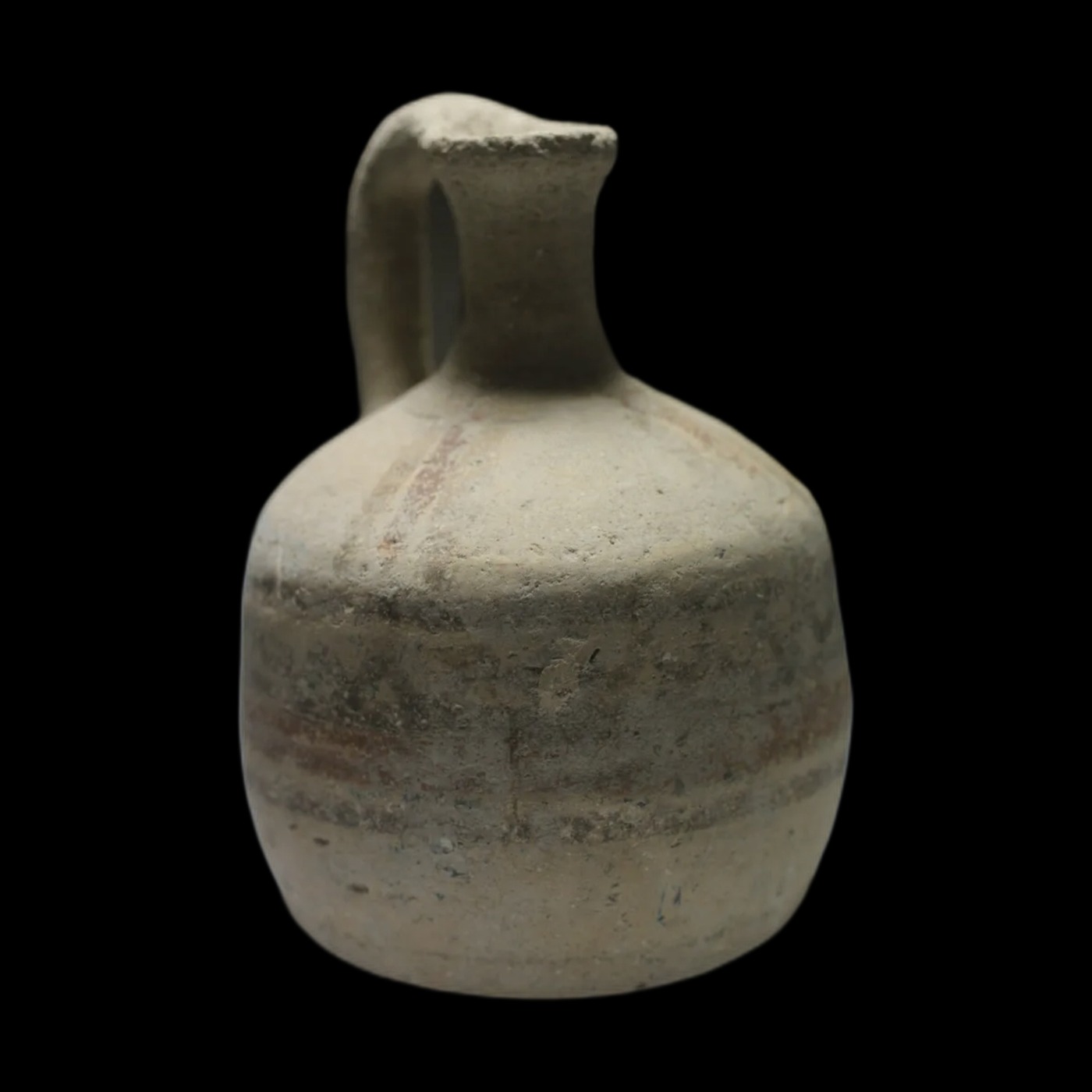
A beautifully preserved terracotta jug from the Iron Age, dating to approximately 800–700 B.C. — a period that witnessed the rise of the great Mediterranean civilizations, the founding of Rome, and the flourishing of Phoenician trade networks. This small but perfectly formed vessel, measuring approx. 12.5 × 9 cm, embodies the everyday artistry of the ancient world.
The jug features a globular body with a narrow neck and trefoil (pinched) mouth, designed for controlled pouring of liquids — most likely wine, oil, or perfumed unguents. A single loop handle connects the rim to the shoulder, providing an elegant and functional grip. The body is decorated with painted horizontal bands in red and brown pigment, with traces of blue-green colouring visible on the shoulder — a palette that speaks to the sophisticated colour sense of Iron Age potters.
The condition is remarkable: no repairs, no restoration. What you see is precisely what emerged from the earth — the authentic surface, the original pigments, the genuine patina of nearly three millennia. The earthen encrustation that clings to the surface is itself a certificate of authenticity, evidence of the vessel's long rest in the soil.
This jug is certified by the AIAD (Association of International Antiquities Dealers), an organization dedicated to maintaining the highest standards of authenticity and ethical dealing in the antiquities trade. The AIAD certification provides collectors with confidence in both the genuineness and the legitimate provenance of the object.
Provenance & Details
- •Private collection, acquired prior to 1970.
- •from the Private Collection K. N. H., Switzerland
- •Amiran, R., Ancient Pottery of the Holy Land, Massada Press, 1969
- •Mazar, A., Archaeology of the Land of the Bible, 10,000-586 B.C.E., Doubleday, 1990
- •Lehmann, G., Decorated pottery styles in the northern Levant during the Early Iron Age, in: The Philistines and Other “Sea Peoples” in Text and Archaeology, Society of Biblical Literature, 2013
- •Darby, E. D., & de Hulster, I. J. (Eds.), Iron Age Terracotta Figurines from the Southern Levant in Context, Brill, 2022
THE IRON AGE MEDITERRANEAN: A WORLD IN TRANSFORMATION
The period between 800 and 700 B.C. was one of the most dynamic and transformative eras in Mediterranean history. It witnessed the rise of the Greek city-states, the expansion of Phoenician trading networks across the western Mediterranean, the legendary founding of Rome (traditionally dated to 753 B.C.), and the flourishing of the great Assyrian Empire in the Near East. It was an age of colonization, commerce, and cultural exchange on an unprecedented scale.
Terracotta vessels from this period are among the most eloquent witnesses to this interconnected world. The painted bands of red and brown pigment that decorate this jug — with their traces of blue-green colouring — speak to a sophisticated palette that drew on traditions stretching back millennia. The trefoil (pinched) mouth, designed for controlled pouring, is a form that appears across the Mediterranean world, from the Levant to the Aegean to the Italian peninsula, evidence of shared functional solutions and aesthetic preferences.
The AIAD (Association of International Antiquities Dealers) certification provides an important guarantee of authenticity and ethical provenance. Founded to maintain the highest standards in the antiquities trade, the AIAD requires its members to adhere to strict codes of conduct regarding the authenticity, condition, and legal status of the objects they sell. An AIAD certification is a mark of confidence for collectors navigating the complex landscape of the antiquities market.
The remarkable condition of this jug — no repairs, no restoration — is itself a testament to the quality of ancient craftsmanship and the protective environment in which the vessel was preserved for nearly three millennia. The earthen encrustation that remains on the surface is not a flaw but a badge of authenticity, evidence of the vessel's long and undisturbed rest in the soil of the ancient world.
Enquire