Coins
Lycian League — Silver Hemidrachm, Apollo / Lyre
Lycian League, Masikytes Mint, ca. 27–20 BC
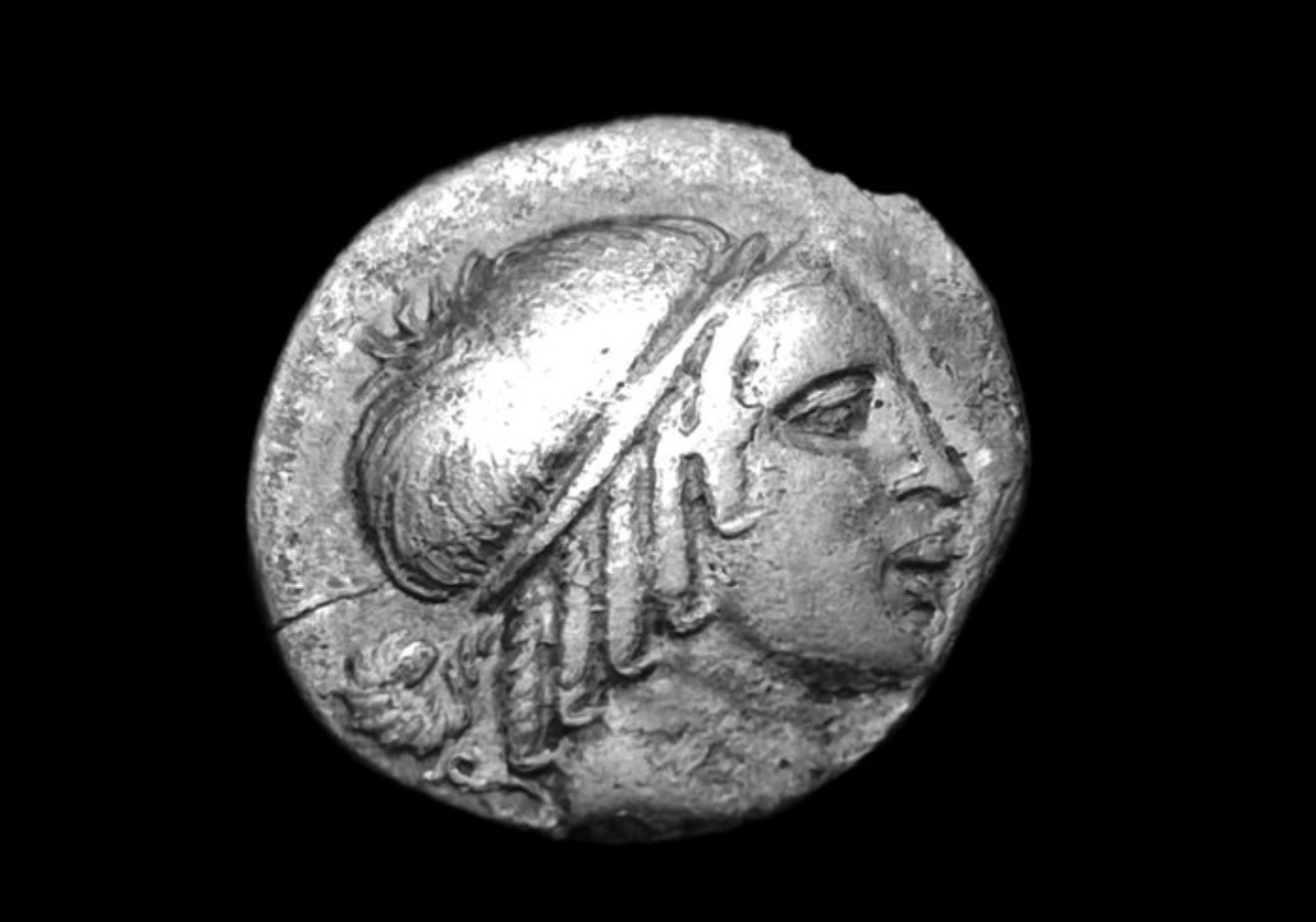
A fine silver hemidrachm of the Lycian League, struck at the mint of Masikytes circa 27–20 BC. The obverse displays the laureate head of Apollo facing right, rendered with classical precision and sensitivity — the god's hair bound in a laurel wreath, his features idealized in the finest Hellenistic tradition. The reverse bears a lyre (kithara) within an incuse square, flanked by the letters M–A and Σ–I, with ΛΥΚ above, identifying the issuing authority as the Lycian League (Lykion).
The Lycian League (Λυκίων τὸ κοινόν) was one of the most remarkable political institutions of the ancient world — a federal republic comprising some twenty-three city-states along the southern coast of Asia Minor (modern-day Turkey). Praised by both Strabo and Montesquieu as a model of representative government, the League operated with a sophisticated system of proportional representation centuries before such concepts emerged in modern political thought. Each member city sent one, two, or three delegates to the federal assembly depending on its size, and contributed proportionally to taxation and military levies.
This coin was struck during the final phase of the League's autonomous coinage, after Lycia had been incorporated into the Roman provincial system under Augustus. The continued use of Apollo and the lyre — symbols deeply associated with Lycian identity and the cult of Apollo at Patara — demonstrates the persistence of local cultural expression even under Roman hegemony. The lyre, sacred instrument of Apollo, references both the god's role as patron of music and prophecy, and the famous oracle at Patara which rivalled Delphi in prestige during the winter months.
The coin is catalogued as RPC I 3310 (Roman Provincial Coinage). It measures approximately 15.55 mm in diameter and weighs 1.34 grams — consistent with the hemidrachm denomination of the late Lycian League series. The silver is of good quality, and the strike is well-centred on both sides, with the portrait of Apollo showing fine detail in the hair and facial features. The reverse lyre is clearly rendered within its characteristic incuse square frame.
This hemidrachm represents an exceptional intersection of numismatic art, political history, and cultural identity. It is a tangible relic of one of antiquity's most progressive political experiments — a federation that balanced local autonomy with collective governance — and a testament to the enduring power of Hellenistic artistic traditions in the Roman East.
Provenance & Details
- •Private collection, acquired prior to 1970.
- •from the Private Collection K. N. H., Switzerland
Enquire