Coins
Roman Bronze Coin
Roman Empire
The Roman Empire was built on bronze. While gold and silver coins circulated among the wealthy, it was the humble bronze coin — the as, the sestertius, the follis — that oiled the machinery of the greatest empire the ancient world had ever seen. With bronze coins, legionaries were paid, bread was bought, taxes were collected, and the vast network of Roman commerce that stretched from Britain to Mesopotamia was sustained.
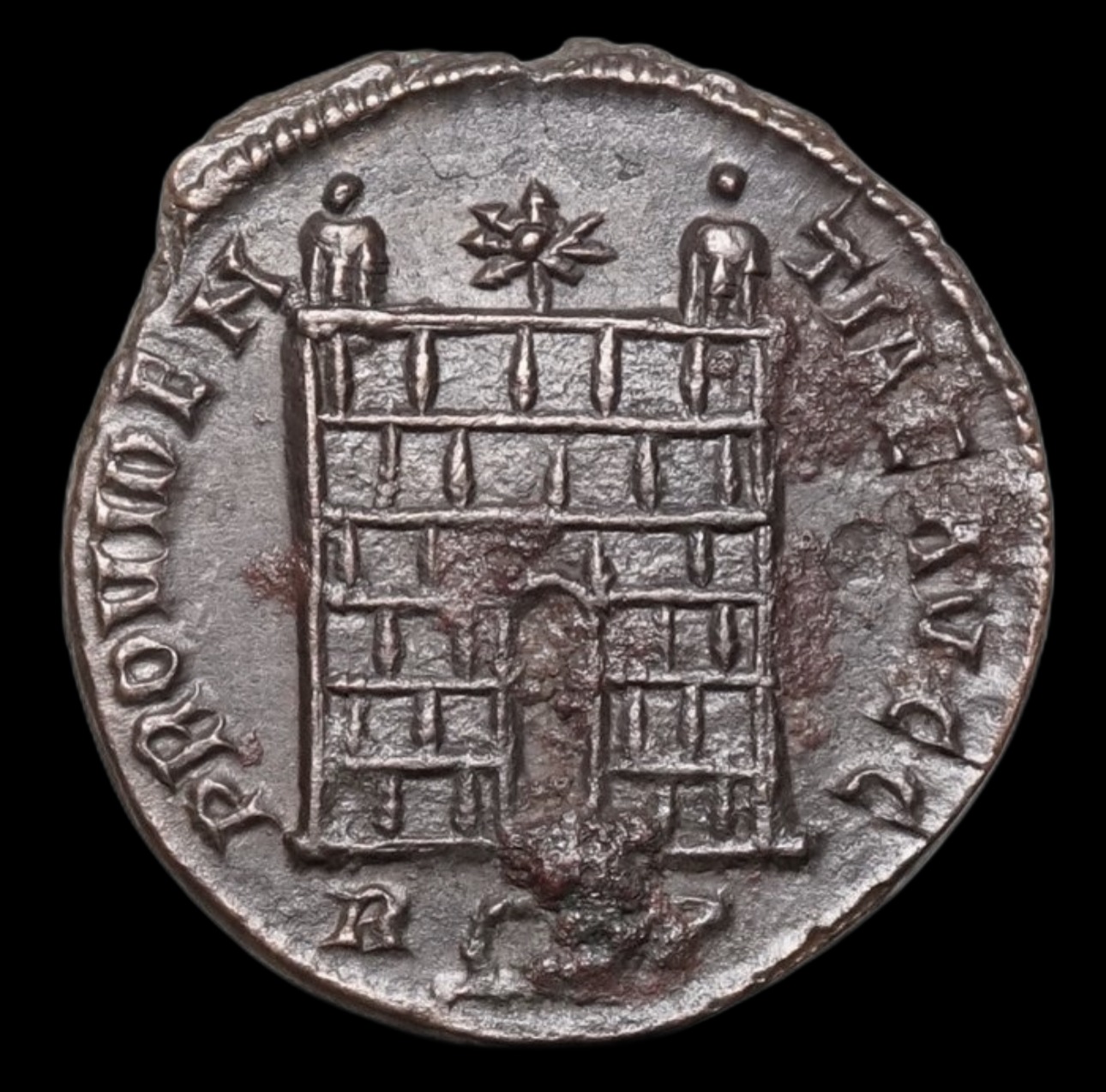
This Roman bronze coin is a tangible fragment of that extraordinary system. The portrait on its obverse — rendered with the confident realism that characterised Roman art — depicts an emperor who once commanded legions, built aqueducts, and shaped the destiny of millions. The reverse carries symbols of imperial power and propaganda — messages designed to reassure the populace that Rome was eternal and its rulers divinely ordained.
Two thousand years after it was struck, this coin still speaks with the voice of Rome.
Provenance & Details
- •Private collection, acquired prior to 1970.
- •from the Private Collection K. N. H., Switzerland
- •Carradice, I. & Cowell, M., The minting of Roman Imperial bronze coins for circulation in the east: Vespasian to Trajan, The Numismatic Chronicle, 1987
- •Bastien, P., Imitations of roman bronze coins, AD 318-363, Museum Notes (American Numismatic Society), 1985
- •Metcalf, W. E., Roman imperial numismatics, A companion to the Roman empire, 2006
- •King, C.E., The Roman Bronze Coinage in Britain and Monetary History from AD 293 to 350, The British Numismatic Journal, 1983
- •Calparos, D. et al., Characterization of bronze Roman coins of the fifth century called nummi through different analytical techniques, Applied Physics A, 2013
The story of Roman currency begins not with shimmering gold, but with hefty blocks of bronze. In the early Republic, around the 5th century BC, Romans used crude bronze pieces known as 'aes rude' for trade. This evolved into cast bronze bars, the 'aes signatum', and eventually, around 300 BC, the first true Roman coins emerged, modeled after the Greek currency of southern Italy. These early bronze coins, like the 'as' and its fractions, formed the bedrock of the Roman economy. They were the currency of the people, used in bustling markets to buy bread, wine, and everyday necessities, connecting citizens and soldiers across a rapidly expanding territory.
During the Imperial period, the bronze coin became a powerful instrument of the state. While gold and silver coins like the aureus and denarius were used for large payments and military salaries, bronze denominations such as the sestertius, dupondius, and as were the lifeblood of daily commerce. Mints across the empire produced millions of these coins, not just as currency, but as a form of mass media. Each coin bore the portrait of the reigning emperor, a constant and tangible reminder of imperial authority in the most remote provinces. This practice, starting with Julius Caesar, transformed coinage into a tool for political propaganda, announcing new rulers and celebrating military victories.
The legacy of Roman coinage extends far beyond the fall of the empire. The system's eventual debasement, with bronze coins containing less and less precious metal, mirrored the economic crises of the later centuries. Yet, the structure of Roman finance was so influential that it provided the blueprint for many subsequent European monetary systems. Words like 'dinar' (from denarius) and the very concept of money in Romance languages ('dinero', 'denaro') echo their Roman origins, demonstrating the profound and lasting impact of these ancient bronze pieces on the modern world.
Enquire